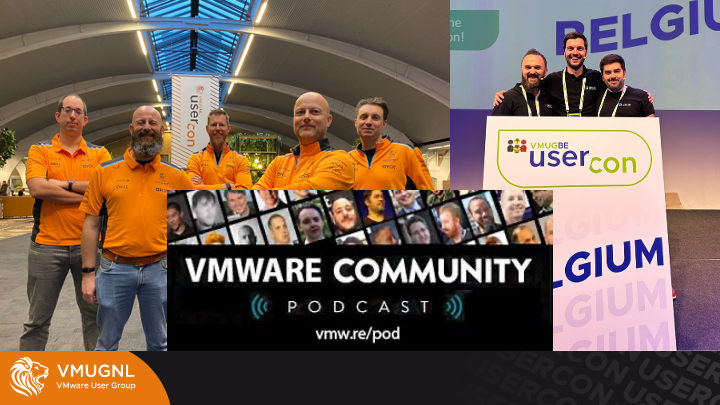
On Wednesday the 12th of March I presented a short session during the Dutch VMware UserGroup UserCon event. I would like to share my session here also to reach more than only the attendees of the event.
In this session, I wanted to talk about what technology and people have in common.
But first let me introduce myself.
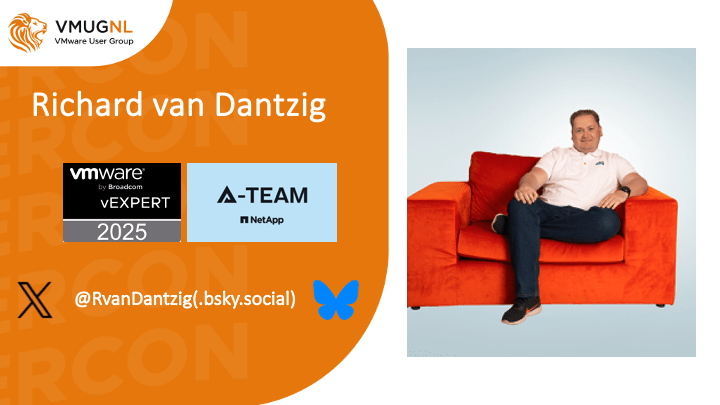
My name is Richard van Dantzig. As you might recognize from the orange chair, I work at ITQ. I’ve been sharing my experiences on my blog, Dive-Virtual.com, for several years now, and I’m part of several advocacy programs. This means members are eager to share their knowledge and experiences around a particular ecosystem. I’m one of about 50 members worldwide of the NetApp A-Team. I’ve also been part of the VMware vExpert program since 2018. For the past three years, as a vExpert PRO, I’ve been supporting people who are interested in the program. This year, there are around 1300 active vExperts, and about 30 of them work at ITQ. Both programs provide a network of experts and access to early information through webinars and sessions.
The goal of this session is to show what the vCommunity is, and what it consists of, and to encourage you to share your knowledge too!
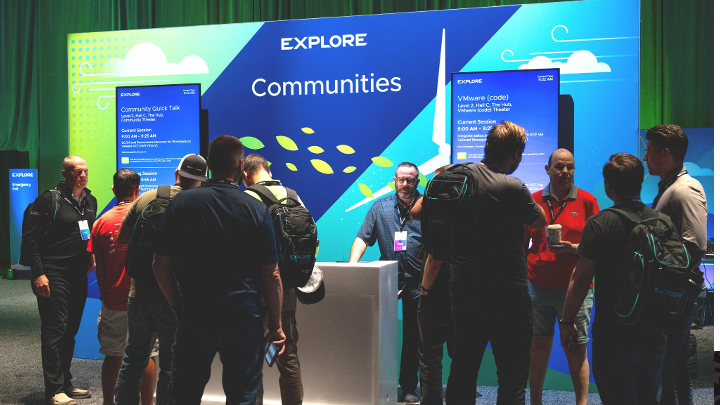
The vCommunity is a term that’s been used for more than 10 years to refer to everyone with a passion for virtualization in its broadest form who shares or consumes knowledge. So, basically, everyone who’s here at the VMUG today. I have to say that I find it very difficult to pinpoint when I started belonging to the vCommunity. Was it the moment I installed my first ESX host in 2004? Or was it my first VMware training in 2006, where I met like-minded people who I’ll probably say hello to again today? Was it at my first event or when writing my first blog? Actually, it doesn’t matter much because, whatever stage we’re at, we have an impact on how virtualization products are developed and applied. Because without readers, there are no blogs, without visitors, there are no events, and without users, there’s no software. So, whatever you do, thank you for being part of the vCommunity!
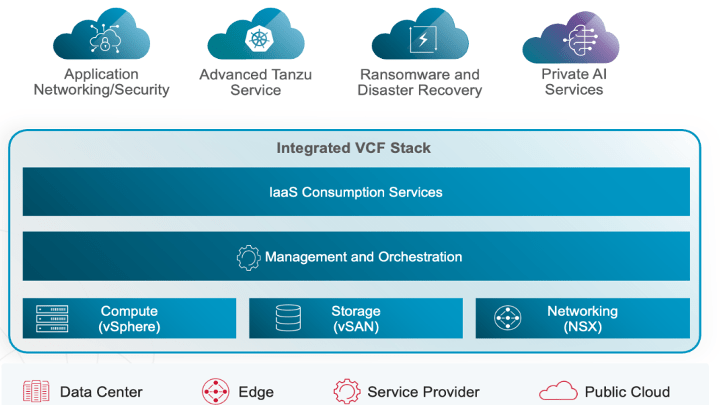
Now, I’d actually like to talk to you about the similarities between technology, like VMware Cloud Foundation, and people, like all of us who are part of the Community.
The great similarity is that the whole is greater than the sum of its parts. Where, with VMware Cloud Foundation, the whole is formed by Compute, Storage, and Networking, within the vCommunity, the emphasis is on contributions, knowledge sharing, and togetherness. Just as in a community or neighborhood, a tech community like the vCommunity offers a number of advantages. Where in your neighborhood you always have someone who can help you with a missing ingredient or an extra hand with heavy work, a tech community offers you help in gaining experience or knowledge. Where a community can support you when life gets tough, the vCommunity offers help if you run into problems in your work and even beyond. A very clear example is that a few years back, Alan Renouf, a well-known face in the vCommunity, lost his house in the Bay Area due to wildfires. To help him, an action was set up within the vCommunity to collect donations. That, too, is the power of a community. Looking at the different parts of the vCommunity, these are quite well related to the components of VMware Cloud Foundation.
Where with VMware Cloud Foundation the whole is formed by Compute, Storage, and Networking, within the Community the emphasis is on contributions, knowledge, and cohesion.
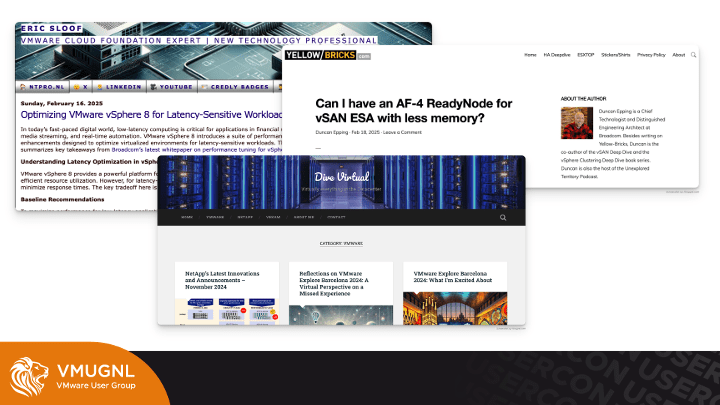
The foundation that’s laid within VCF by the ESX layer is laid within the vCommunity by individual contributions. These are contributions like blogs, podcasts, and webinars. Thanks to blogs like NTPRO from Eric Sloof, or Yellowbricks from Duncan Epping, but also many others, knowledge is shared.
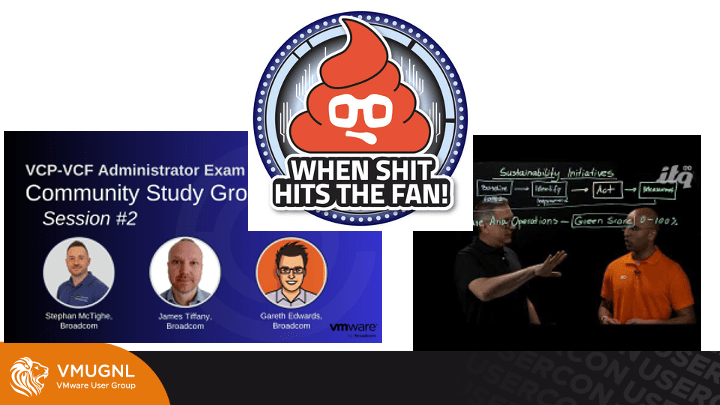
Webinars or study groups help where needed. More visually oriented people can use demos or lightboard videos. And then there are the many podcasts that bring people together and offer knowledge in a different way.
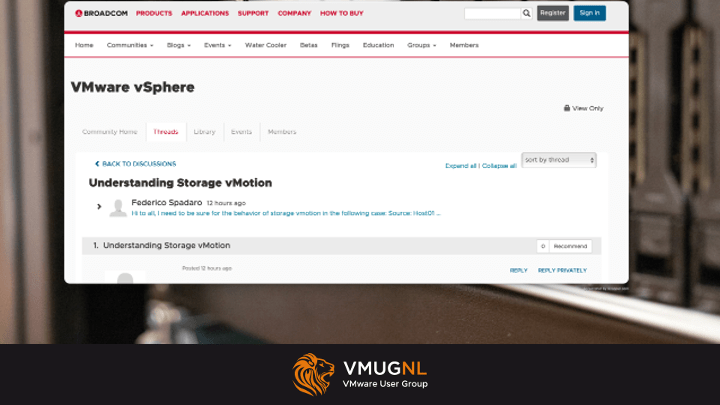
All these individual contributions are fantastic, but without a network of people looking for information, they don’t amount to anything. Social media connects people worldwide and provides an international knowledge base, just as vSAN does for virtual machines within VCF.
Forums like the Broadcom Community, successor to VMTN, but also many other community forums offer everyone the opportunity to seek help but also to offer it and keep it findable. With this, everyone who contributes with information directly adds to a gigantic database of information.
The connection that social media but even more so live events like the VMUG or similar events bring is comparable to network virtualization with NSX.
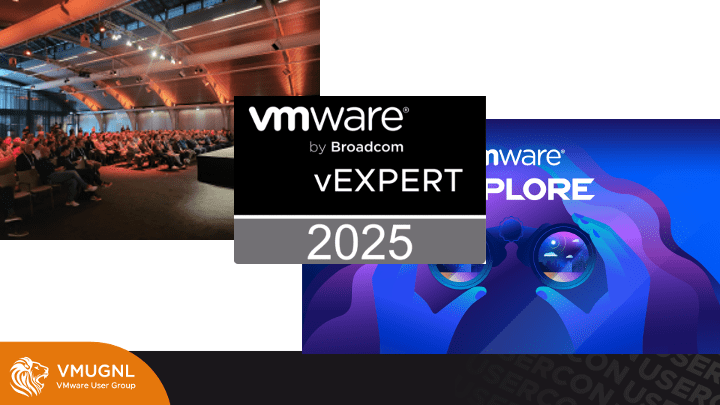
Events and programs like the vExpert program connect people from all companies, continents, and religions with each other with a single goal: to follow and share your passion for a particular technology. The only thing that’s asked of you is that at some point you also give something back. The moment you do this, you only have to apply for the program and hope that the program values your contributions and lets you be part of the team.
And just as within VCF, the individual contributions can work fine without a central management body, but thanks to guides like the User group leaders and community program managers, we can all share our contributions worldwide much more easily. This not only delivers an enormous increase in the reach of your contributions but also a community that supports each other.
What I often hear is: what I do isn’t special… and I personally think that’s the biggest nonsense. Because everyone runs into a problem that you solve that will also affect others, or starts with something new that can be a huge help to someone who’s also considering starting with something. By sharing knowledge and experiences, you yourself don’t become less valuable, but you enrich our community. Think of tooling like RVtools that started as a contribution to the vCommunity or blog sites like Yellowbricks from Duncan Epping that has stimulated not only the vCommunity but also his own development within VMware.
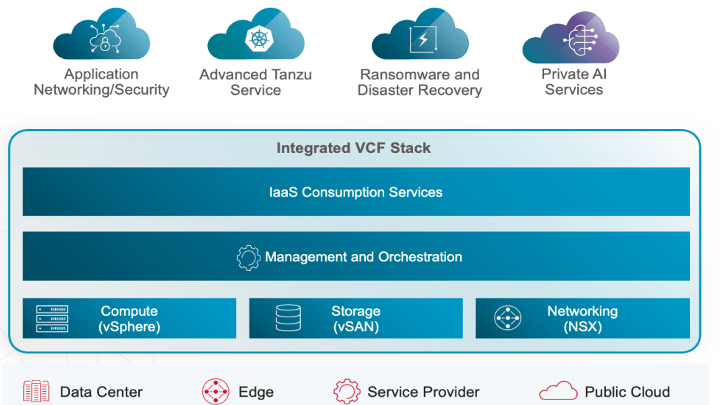
So, to summarize everything, tech communities aren’t that different from VMware Cloud Foundation.

Where VCF is about locations where resources can be offered, the vCommunity is about the possible forms of offering. The lower layer of the community is formed by contributions, knowledge, and connections that are brought together and connected by User groups and community groups. The tooling that these groups use as Discord, Slack, and the like, form the connection between the individual contributions. All this forms the tech community where you yourself steer to determine the direction where the ecosystem is going. This not only delivers a larger network and reach but also opportunities to improve your career, events, access to developers, and easier access to all the knowledge in the knowledge base….
In short, start sharing your content, find the method that suits you best and thereby ensure your contribution to the vCommunity. Blog, share your code or moderate, it doesn’t matter. Sign up for advocacy programs like vExpert, Broadcom Tech Insiders or whatever, and expand your network. Because without you, there is no vCommunity. Together, we not only build better private clouds but also better careers!

Questions? Feel free to reach out to me on Twitter @RvanDantzig or on Bluesky @RvanDantzig.bsky.social.
Let’s embark on this exciting journey from spectator to changemaker in the vCommunity!
Links
VMware Usergroup
Omnissa
 Dive Virtual
Leave a comment