
There’s an analogy that has been on my mind for a while. Choosing a platform after a few rough years is a bit like a midlife crisis. People get restless, they experiment, some even buy the red sports car. But more often than not, they end up back with what they know works. And nobody really wants to talk about it openly.
I wrote that line months ago and left it in a drawer. This week at VMware Explore on Tour in Frankfurt, it came back to me more than once.
The conversations I had with customers were honest. License prices came up in almost every one of them. So did the feelings about Broadcom as an organization, and those were not always warm. Nobody pretended the last two years were easy.
But when the talk moved from feelings to facts, the story changed. A lot of experimenting has been done. Proofs of concept with other platforms, business cases for leaving, sometimes a small part of the environment already moved. And still, most of these organizations are running VMware today.
When I asked why, I heard the same three answers again and again. The feature set is still hard to match once you look past the basic hypervisor. Enterprise support matters when something breaks at three in the morning. And the platform is stable, in environments where stable is the whole point.
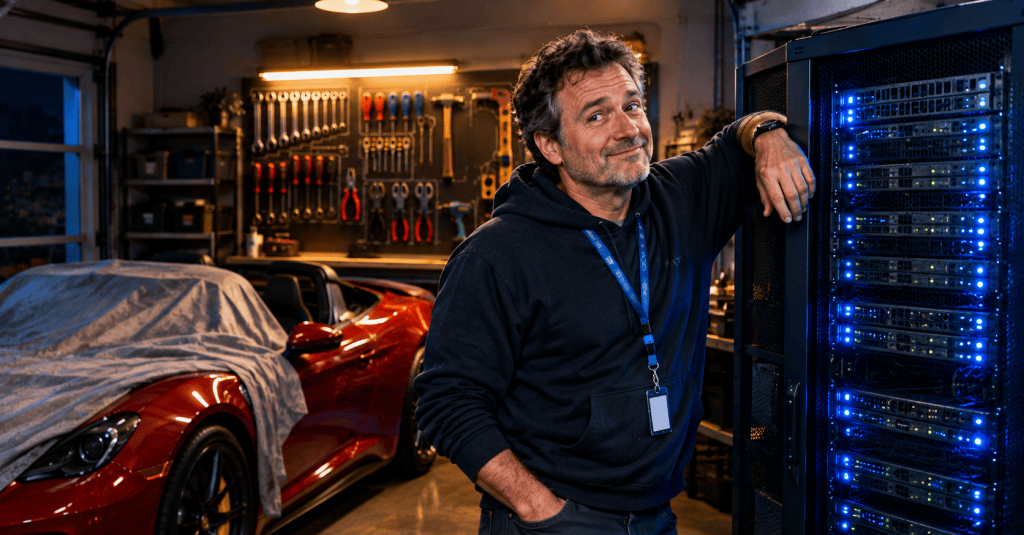
That doesn’t mean every experiment was wasted. Some of that sports car stays in the garage, and that’s fine. Platforms like Red Hat OpenShift and SUSE are really strong in specific areas, for example container platforms or workloads built around open source stacks. For those workloads they can be a better fit than VMware today. The smart customers I spoke to didn’t pick one side. They used the right tool for the right job, and kept VMware where it does what it does best.
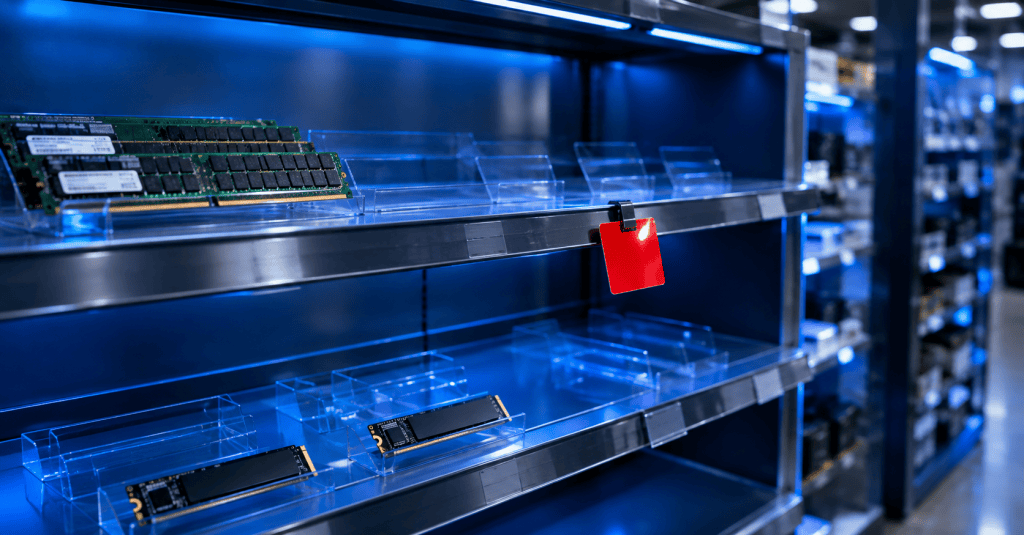
Then there is the cost of leaving completely. Migration projects take longer than planned, teams need retraining, and processes and automation have to be rebuilt. And this year another cost has joined the list: hardware. Memory and storage prices have gone through the roof and delivery times are long. Many alternative platforms mean new hardware, and right now that is about the worst moment to buy it.
VCF can help here, in more ways than people expect. With memory tiering you can use NVMe as an extra memory layer, so the hosts you already have can carry more workloads. VCF Operations shows you which VMs are oversized or idle, so you can reclaim resources before you order anything new. And then there is storage, where I still hear a stubborn myth: that VCF means vSAN, always. It doesn’t. vSAN ESA with deduplication is a great option, but VCF also works with external storage. If you already have a good storage array, you size your hosts for CPU and memory instead of capacity, and that can save you a few hosts. In today’s market, a few hosts is real money.
None of this makes the hardware crisis go away. But it can push your next big purchase further down the road.
So the question shifts. It moves away from “how fast can we leave?” towards something more pragmatic: “what does it actually cost us to change?” In many cases, the answer is less attractive than people hoped.
Let’s be clear about the other side too. The bill is not going down. If you stay, you pay, and for most customers I spoke to that part is settled. Which makes a different question far more important than the price: how much of what you pay for are you actually using?
Many organizations bought VMware Cloud Foundation, but run it exactly like the vSphere environment they had before. They pay for the full stack and use a fraction of it.
“If you’re paying for VCF and only using vSphere, the expensive part isn’t the license.”
That’s also where a lot of my time goes right now. In customer meetings and scoping sessions, the conversation is rarely about licenses. It’s about which parts of the platform the customer already owns but doesn’t use yet, and how to get them working. Sometimes that runs through a Broadcom entitlement, sometimes through our own projects, and sometimes we take over part of the daily work with managed services. The goal is the same every time: turn what’s on the contract into something that runs and delivers value.
There was one more topic in Frankfurt, often in the same breath as the price discussion: sovereignty. Where does my data live, who runs my platform, and how dependent am I on parties outside Europe? For some organizations the best answer is to stop buying and maintaining hardware altogether. That’s why we built the ITQ Cloud Platform: fully managed by ITQ, on VCF, on dedicated bare metal. Today it runs in the Netherlands, and we’ll expand further into Europe as demand grows. Customers keep the platform their teams know, while the hardware cycles and lifecycle work move to us. And with the hardware market the way it is, that’s not a bad moment to hand them over.
All of this happens very quietly. There are no press releases saying “we looked at everything and decided to stay”. Contracts get renewed, VCF gets rolled out, environments get optimized. Life goes on.
So back to that midlife crisis. People experiment, some of what they try is worth keeping, and most of them come back to what works. Maybe it’s time we talked about it openly, because the real discussion is not about staying or leaving anymore. It’s about getting your money’s worth now that you’ve stayed.
I’m curious where you are. Did you experiment and come back, did some workloads find a new home, or did you leave and never look back? Let me know in the comments, or grab me for a coffee at the next event.


Leave a Reply